Polio survivor is a passionate vaccine advocate
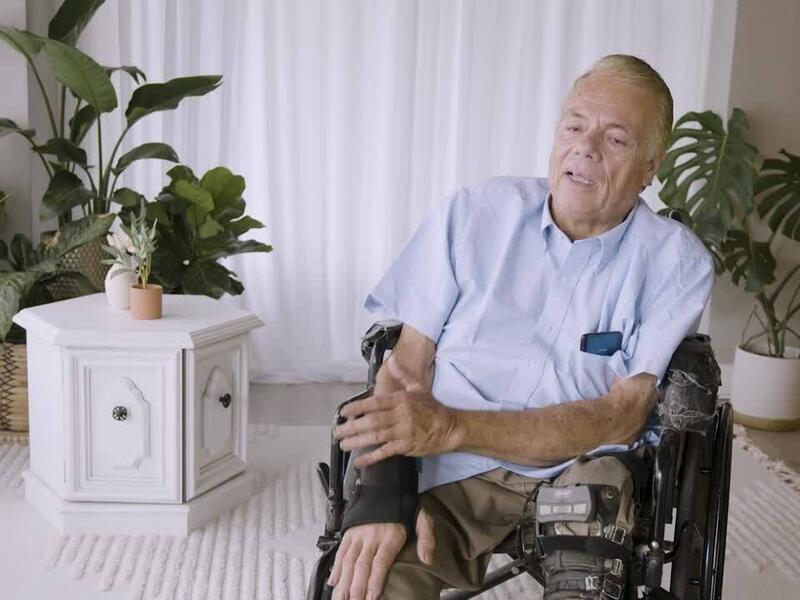
Mark Sternhagen was 18 months old when he contracted polio.
Only a few months before in December of 1956, a vaccine for the disease became available in his hometown of Scotland, South Dakota. Sternhagen’s siblings and cousins got the vaccine, but because Sternhagen was running a temperature that day, he wasn’t vaccinated.
“There is no question in my mind that had I been vaccinated, I wouldn’t have gotten polio,” said Sternhagen.
Sternhagen shares his story in hopes of helping others understand the importance of vaccinations for preventing devastating, life-altering diseases.
“That’s what vaccination does. It gives you a better life – not just that you get to survive something,” he said. “It’s the fact that you get to have a better life.”
Growing up with polio
Polio is a highly infectious disease caused by a virus. It affects the nervous system and can lead to paralysis. Some people with polio also develop post-polio syndrome, which appears decades after the initial illness and causes new muscle weakness, pain and paralysis.
Before the discovery of the Salk vaccine, polio was one of the most feared diseases.
As a toddler, Sternhagen was treated at a polio ward in Omaha, Nebraska. While there, he spent time in an iron lung, an artificial respirator invented to help polio patients breathe.
“I was to the point where I could barely move,” he said.
There is no cure for polio, and as Sternhagen describes, “it can only be lived with after you’ve gotten it. And once you’ve got polio, there is very little they can do to mitigate what it’s going to do.’’
When Sternhagen returned to his family and began school, he was able to walk with the use of braces and crutches.
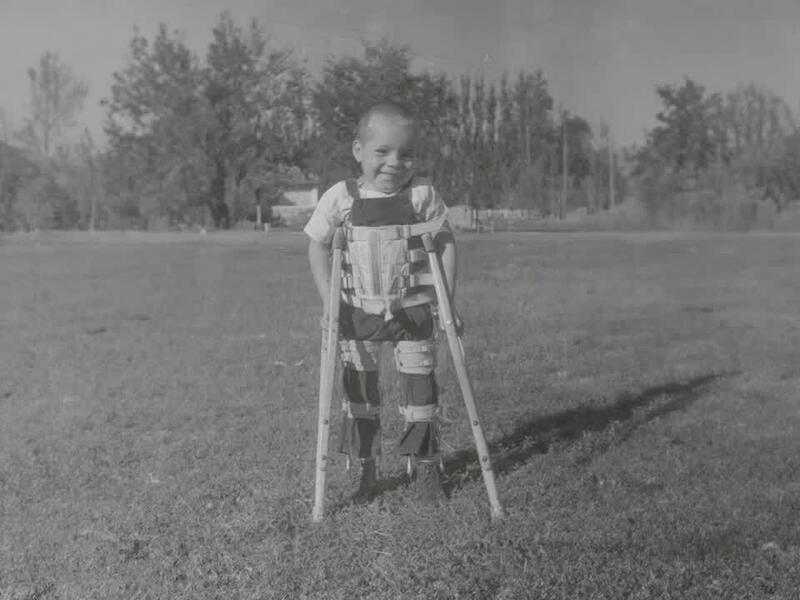
As a child with polio, Mark Sternhagen walked with the help of crutches.
Photo courtesy of Mark Sternhagen
“I fought the wheelchair forever,” he said. “And that was a mistake because if I had started using the wheelchair maybe 10 years earlier, part-time, I would have been able to walk a lot longer.”
A few years later, Sternhagen was enrolled in a school started for children affected by polio, known as Crippled Children’s Hospital and School in Sioux Falls. Today, the organization is named LifeScape.
“It really gave me my independence,” he said. “I really owe a lot to the time I spent there, even though I hated it. I don’t know where I’d be today without that experience.”
The end of the polio era
When Sternhagen graduated from high school in 1973, he was one of the last students at the school with polio.
Prior to the licensing of the Salk vaccine in the 1950s, more than 15,000 people were paralyzed from polio each year in the U.S., according to the Centers for Disease Control and Prevention.
“Pretty much everybody I knew that had polio ended up with a different long-term disability,” Sternhagen said.
As the vaccine became widely available, the era of polio came to an end.
“In part, I am who I am today because of polio, but it’s true that I’d still get vaccinated if I was given that choice,” said Sternhagen.
Today, Sternhagen lives in Brookings and has written two children’s books and a memoir, “Normal for Me.” He is also an active member of Immunize South Dakota.
The polio vaccine is part of the childhood immunization schedule with the first dose recommended at 2 months old. Learn more about childhood immunizations.
Learn more
…
Posted In
Family Medicine, Healthy Living, Immunizations
link