Mom Defends Decision to Take Her Toddler for an Illegal Medical Procedure
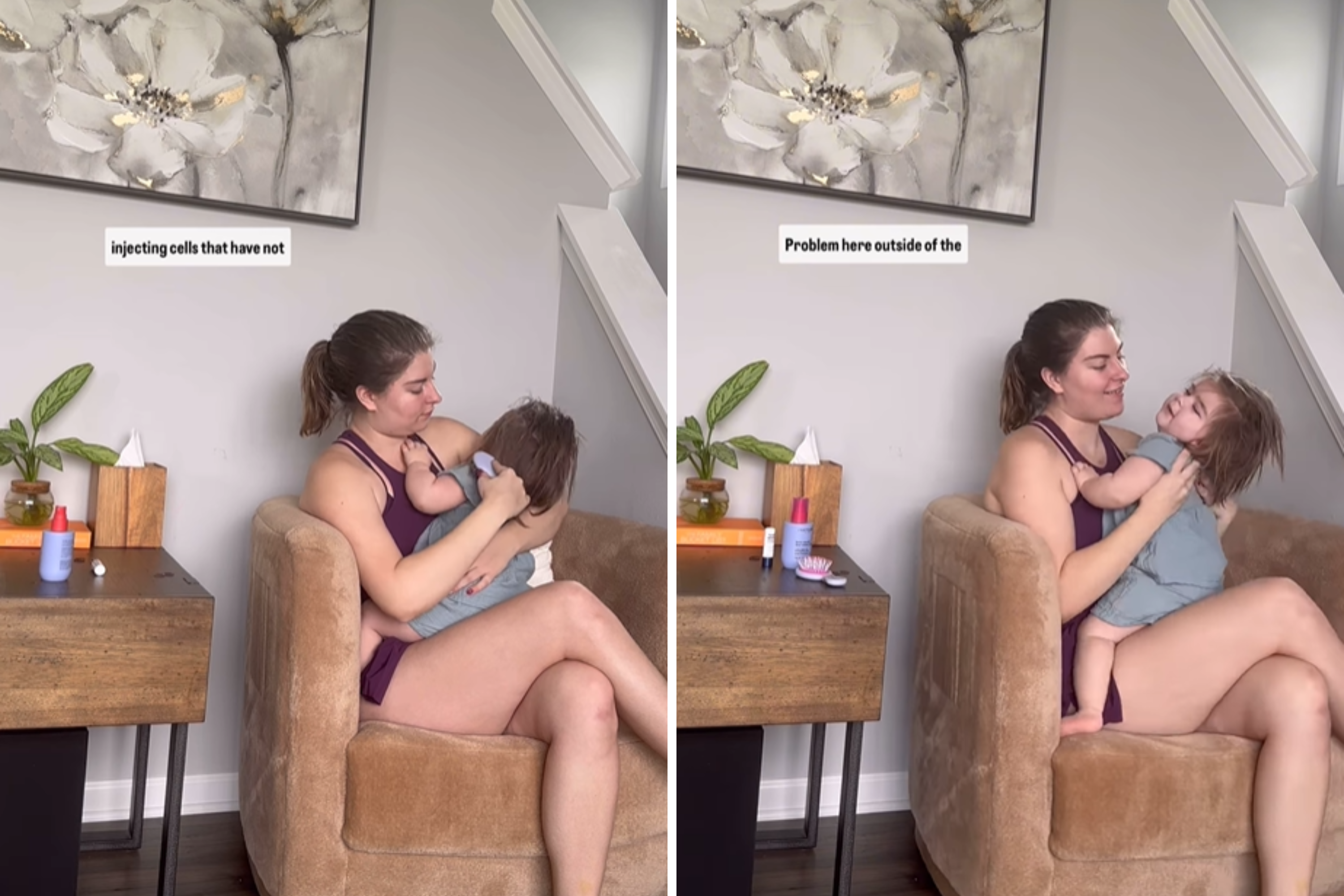
A mom from Wisconsin has defended her decision online to take her 19-month-old daughter for an experimental stem cell treatment not currently legal in the U.S.
Alexa (@adventures.of.mommy), who did not reveal her last name for safety reasons, explained the details in a reel on Instagram, saying that she’s doing what any other parent in her situation would do: fighting to give her daughter the best future.
Lydia, who suffered catastrophic brain damage in infancy after a bacterial meningitis infection destroyed more than half her brain matter, was later diagnosed with spastic quadriplegic cerebral palsy—a condition Alexa says, “Impacts every aspect of her life.”

@adventures.of.mommy
“She is globally delayed and cannot do things like sit, stand, or walk on her own yet,” the 26-year-old told Newsweek. “She’s also nonverbal despite incredibly strong cognitive function. She eats a specific way, has twice daily medications, and practically lives at pediatric therapy clinics.”
Alexa believes that stem cell therapy could offer her toddler a better chance at development and greater comfort.
Stem cells, she explained in her reel, are cells that haven’t yet determined what they’re going to become—and may be able to help rebuild some of the brain matter Lydia lost.
“Her disabilities stem from a loss of brain matter, which cannot grow back,” Alexa said. “[Stem cells are] a promising option to help rebuild some of the lost brain tissue which in turn makes development easier and limits discomforts from her diagnoses.”
But in the United States, the treatment isn’t legal for Lydia’s condition. Stem cell therapies using donor umbilical cord cells—like the one Alexa and Lydia’s father Dan have chosen—are legal in many countries, and do not raise the same ethical concerns as those using embryonic cells.
In the U.S, each potential application must go through extensive clinical trials before being approved by the FDA.
Alexa explained in her reel that Duke University in North Carolina has been working on a clinical trial for cerebral palsy for over five years and has reported success in thousands of cases.
But because Lydia’s brain injury occurred after birth, she doesn’t qualify for its program.
Dr. Heather Hinshelwood, the chief of medicine for Fraum Health, told Newsweek that currently, only large institutions handle cases like Alexa’s.
“She does touch on her daughter being excluded from care in a study due her not having cerebral palsy due to a birth injury,” Hinshelwood said. “Those studies are strictly regulated by every facility’s Institutional Review Board.”
Hinshelwood, who has been doing restorative medicine for almost a decade, explained that once the intervention being studied reaches FDA Phase IIb (expanded access after safety has been established), Alexa may apply for her daughter to participate in the study under the expanded access regulations.
“If I were approached by this mom asking what I could do for her young toddler, I would be very concerned about how far outside of the currently accepted standard of care I would be if I performed a stem cell procedure on a toddler,” Hinshelwood said.
“I do agree it will likely be beneficial for her given how reprogrammable kid brains are, but where we are in terms of regulations and standard of care for pediatrics, I think they are unlikely to find a physician here in the States to do this intervention.”
In her reel, which has amassed over 4 million views, Alexa poses a question for viewers: “If you were in my position, would you do this to your child or would you wait around for the U.S. and miss out on prime developmental years?”
Hundreds of Instagram users commented on her clip and despite receiving criticism on some of her other posts, the response has been overwhelmingly supportive.
“Thousands of people have been following along and wishing Lydia well,” Alexa told Newsweek. “Another couple hundred people have privately [messaged] me asking more about our experience in hopes of establishing a similar method of treatment for their loved ones that suffer from varying disabilities and ailments.”
The family has already begun preparations for travel to Panama, where Lydia will receive stem cell infusions at a private clinic.
Alexa and Dan are also planning for future treatments as their finances allow.
“We’re going to continue prioritizing treatments that increase Lydia’s comfort and quality of life,” Alexa said. “We’ll also continue to maintain her early interventions in hopes of maximizing her young brain’s neuroplastic capabilities.
“Most importantly, we maintain a strict boundary that Lydia remembers her childhood as happy and fun, and not medical coded.”
link