Head injuries top kids’ sledding injuries, HHS study finds
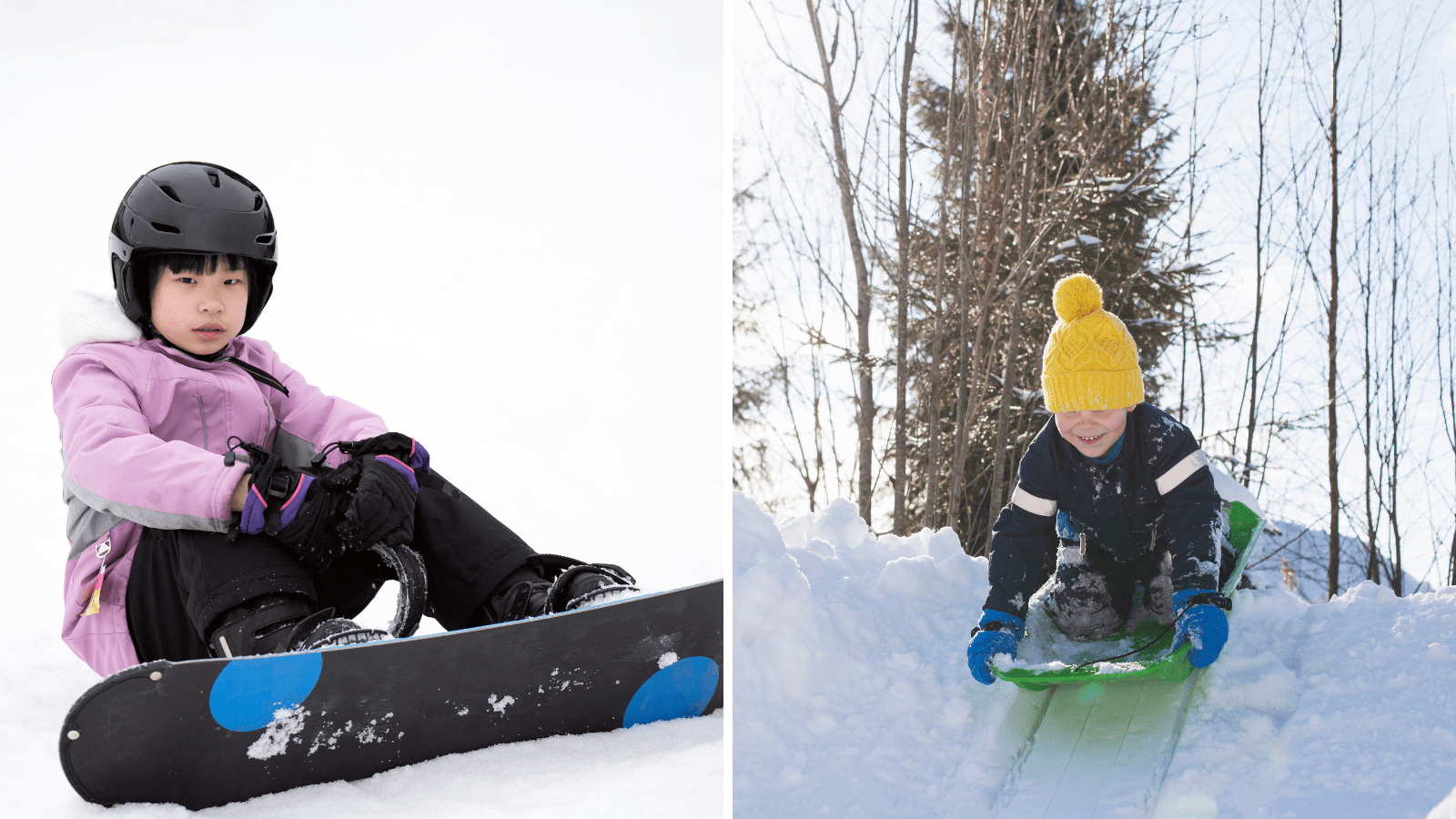
A Hamilton Health Sciences study found that head injuries are the most common sledding injury seen by our McMaster Children’s Hospital emergency department. While helmets have become the norm for skiers and snowboarders, they’re still a rare sight on toboggan hills, where children as young as toddlers speed down hills with only a winter hat on their heads. (Stock photos)
Last month, McMaster Children’s Hospital saw multiple incidents of children sledding into trees, resulting in significant trauma.
Helmets have become second nature for skiers and snowboarders. On toboggan hills, though, that safety mindset disappears. From toddlers to teens, kids are hurtling downhill on sleds wearing nothing but winter hats, leaving their heads unprotected if they crash or ram into an object, like a fence or tree. A Hamilton Health Sciences (HHS) study found that head injuries are the most common sledding injury seen in our McMaster Children’s Hospital (MCH) emergency department (ED).
Most injuries happened when children fell or crashed into objects, typically involving the head, broken bones, or scrapes and bruises.
Head injuries are especially concerning because in rare cases, they can cause lasting brain damage or cognitive difficulties.
Cultural shift needed
The study was led by Dr. April Kam, division head of pediatric emergency medicine at MCH. As well as confirming that head injuries were the most commonly-treated injury, Kam’s study also found that younger kids were more likely to hurt their heads while older children more often had abdominal injuries. Most injuries happened when children fell or crashed into objects, typically involving the head, broken bones, or scrapes and bruises.
Dr. April Kam’s study looked at sledding injuries treated at the ED between 2018 and 2022, to compare injuries before and during the pandemic. As well as confirming a sharp increase during the pandemic, the study provided insights into the types of sledding injuries that brought kids to the ED.

A study by Dr. April Kam looked at sledding injuries treated at HHS McMaster Children’s Hospital emergency department between 2018 and 2022, to compare injuries before and during the pandemic. As well as confirming a sharp increase during the pandemic, the study provided insights into the types of sledding injuries that brought kids to the ED.
Kam’s study also found that most injured children were between six and 10 years old, with an average age of about nine, and just over half were boys.
“Children and teens routinely wear helmets when skiing and snowboarding, where they can control their speed, yet not when sledding where they often have no control over how fast they go,” says Kam, who is calling for a cultural shift, where helmets are also the norm on toboggan hills.
Key findings
Kam launched the study during the COVID-19 pandemic, after noticing more children arriving at the MCH ED with sledding injuries during lockdowns, when other winter activities like skating, hockey, ringette, skiing and snowboarding were cancelled to prevent illness from spreading. She wanted to investigate whether her observations were supported by data.
Kam’s study looked at sledding injuries treated at the ED between 2018 and 2022, to compare injuries before and during the pandemic. Findings were published last winter in Pediatrics & Child Health.
As well as confirming a sharp increase during the pandemic, the study provided insights into the types of sledding injuries that brought kids to the ED.
The study reviewed ED records for 243 children from birth to age 17 who were treated for sledding injuries between 2018 and 2022. Because the World Health Organization officially declared the start of the pandemic on March 11, 2020, that date was used to compare injuries before and after. While babies were included in the age range, the youngest children visiting the ED with sledding injuries were toddlers.

Choose shallow slopes that are free of trees, fences or any other obstacles. In January, our McMaster Children’s Hospital emergency department saw multiple incidents of children who were injured after crashing into trees while sledding. (Stock photo)
The study found that there were relatively few ED visits before the pandemic, but the number increased sharply, especially in 2021. Broken down by year, MCH ED doctors saw: 13 injuries in 2018 and again 2019; 30 in 2020, with about half taking place before the pandemic was declared; 105 in 2021 and 64 in 2022. Overall, this amounted to 62 injuries before the pandemic, tripling to 187 after it started.
Some children required imaging tests, such as X-rays or CT scans, but most injuries were treated without needing hospital admission. During the pandemic, a slightly higher number of children needed surgery, had longer hospital stays, or returned to the ED within a week of their injury.
The ED continues to see patients with sledding injuries each winter, though numbers are back to pre-pandemic levels, says Kam. The types of injuries before, during and after the pandemic remained the same, with head injuries continuing to be the most common.
“While most injuries are minor, serious injuries occur more often than people realize and are often preventable, says Kam. “For example in January, we had multiple incidents of children sledding into trees resulting in significant trauma.” The trauma team treats these incidents in the same manner as children involved in motor vehicle collisions.
As well as highlighting the need to take safety measures such as wearing helmets, supervising children, and choosing safe hills, this study can also help hospitals and public health officials plan ahead if another pandemic or similar disruption happens.
Enjoy safe sledding
Kam, a member of the Canadian Paediatric Society‘s injury prevention committee, isn’t anti-sledding. In fact, she supports sledding as a fun family activity when done safely.

This is an accident waiting to happen: These children are not wearing helmets; sleds on skis aren’t recommended because they can reach dangerous speeds; and lying down can increase the risk of injury to the head, spine and stomach. (Stock photo)
The Canadian Paediatric Society advocates for children to take part in unstructured, outdoor play involving some risk, like sledding, because such play is important for children’s physical, mental and social development. Over recent years, opportunities for unstructured play have dropped as adults focused more on keeping kids as safe as possible, but this can limit children’s ability to learn important skills.
Risky play, like climbing, running, and sledding, supports physical activity, problem‑solving, confidence, resilience and social skills, and can even help address issues like anxiety and inactivity, the society says. Safety measures, like wearing a helmet and following common-sense safety tips (see below) allow kids to enjoy a risky outdoor activity in a way that’s safe and developmentally beneficial.
Key safety tips from the Canadian Paediatric Society:
- Always wear a ski or hockey helmet – not a bicycle helmet – while sledding. Bicycle helmets are only tested up to -10ºC (14ºF) and need to be replaced after one crash. If you use a hockey helmet, make sure it meets the Canadian Standards Association standards.
- Children under the age of five should never go down a hill alone.
- Always sit up or kneel on a sled since lying down can increase the risk of injury to the head, spine and stomach.
- Never sled on or near road.
- Choose shallow slopes that are free of trees, fences or any other obstacles.
- Avoid crowded hills.
- Never use a sled with sharp or jagged edges.
- Ensure handholds are secure.
- Use a sled you can steer rather than a snow disk or inner tube. It will provide better control.
- Sleds on skis aren’t recommended because they can reach dangerous speeds.
- Sled during the day. If you sled at night, make sure the hill is well lit.
- Slide down the middle of the hill and climb up along the sides. Remember to watch for other sledders and move quickly out of the way once at the bottom of the hill.
- Choose designated toboggan hills.
“We want families to take safety precautions so kids don’t end up in the emergency department,” says Kam. “It comes down to maximizing fun while minimizing risk.”
link