


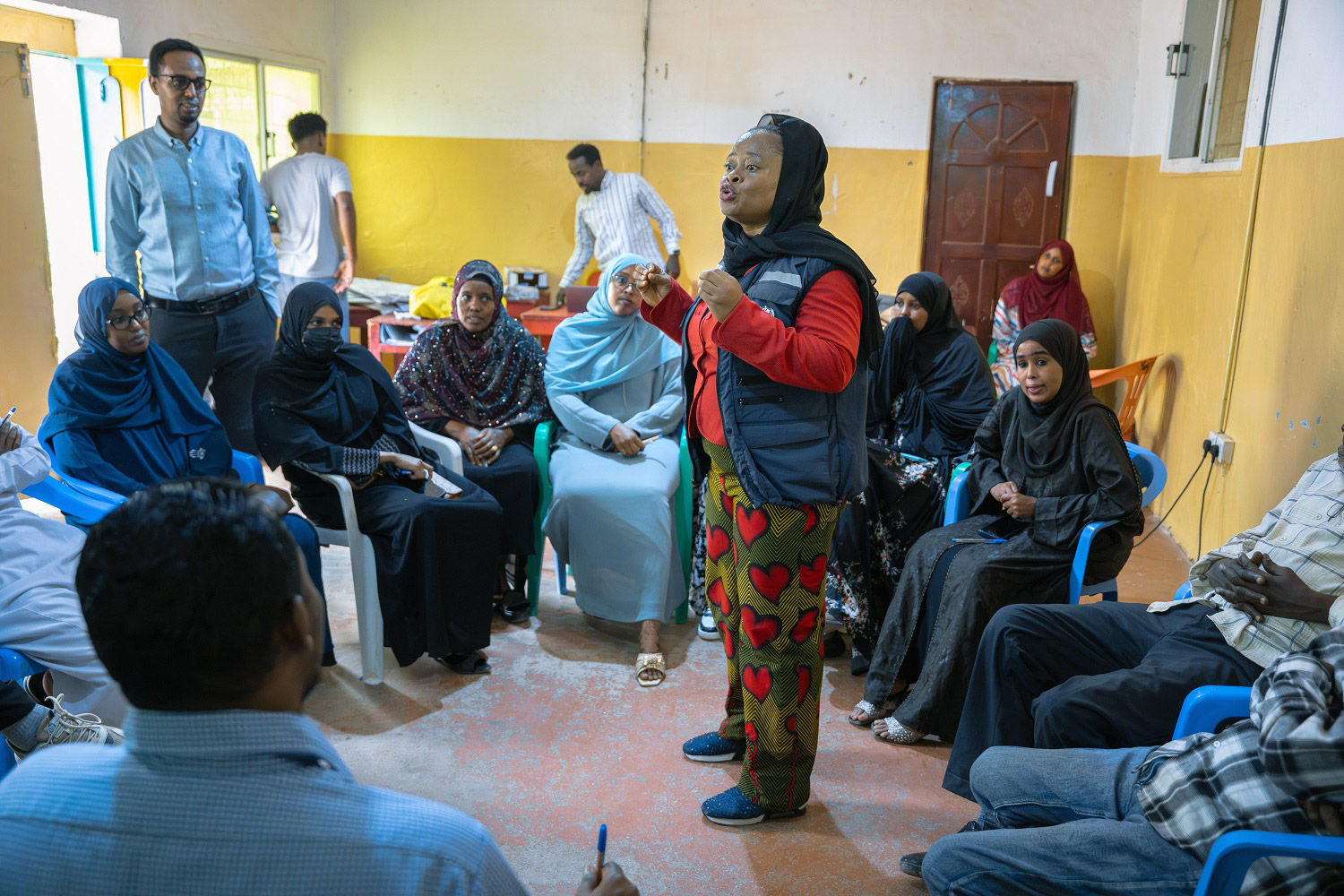

As violence escalates in parts of Jubaland and Somaliland, Somalia’s emergency health system and first responders face mounting challenges. Health workers, including doctors, nurses, security staff and cleaners, regularly operate under high pressure. They must make critical decisions while managing the emotional and physical demands of repeated exposure to trauma. Over time, this sustained stress can negatively impact their well-being and ability to deliver quality care.
To help alleviate these pressures, World Health Organization (WHO) Somalia launched a trauma preparedness initiative aimed at improving patient outcomes while safeguarding the health and mental well-being of health workers. Supported by the Contingency Fund for Emergencies, the initiative combines delivery of trauma supplies with training in mass casualty management, psychological first aid and trauma-informed care, helping ensure that health workers are equipped, supported and protected as they serve their communities.
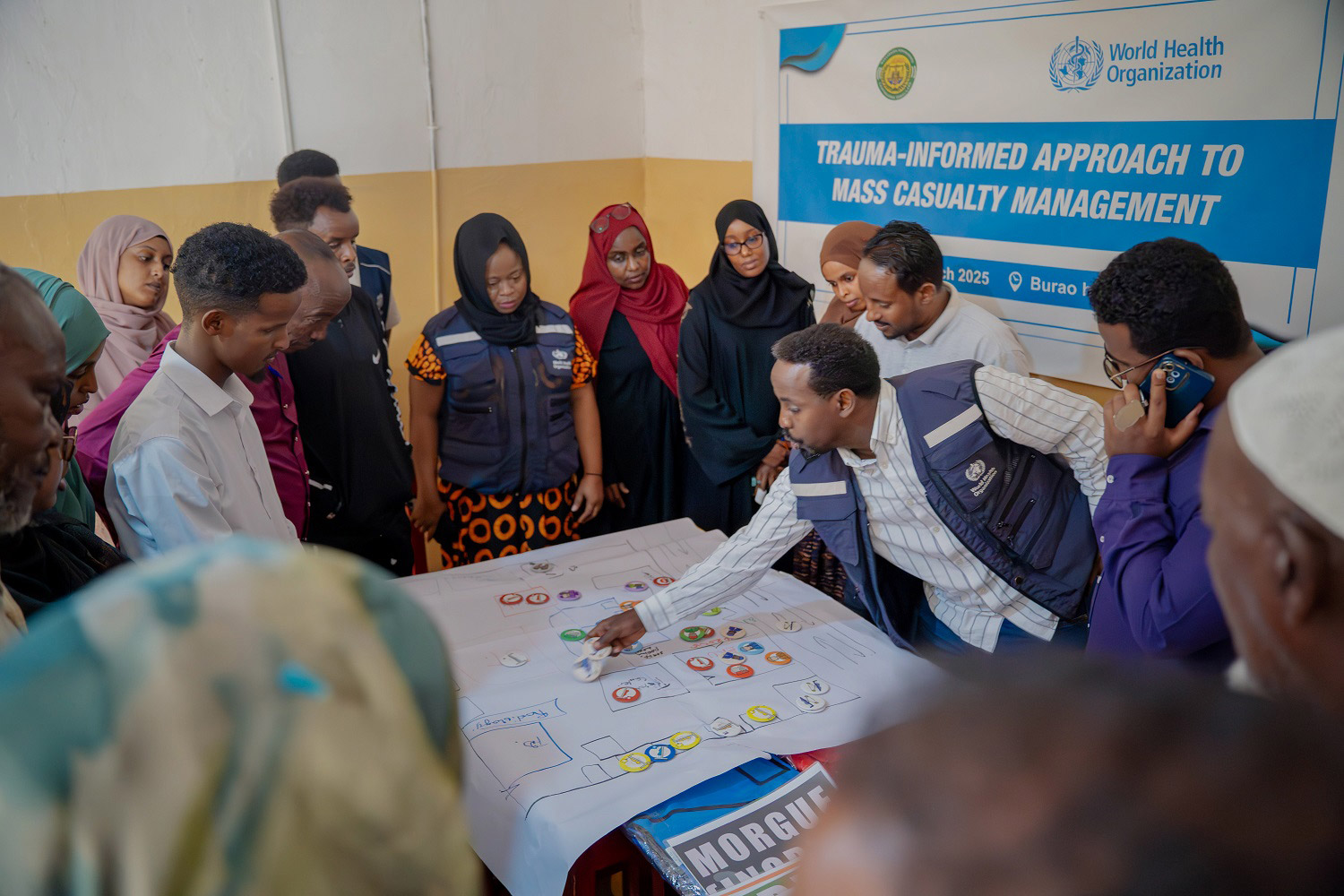
“The most encouraging outcome of this workshop was that participants reached a level where they understood the change is for them and their well-being,” said WHO Somalia’s Mental Health and Psychosocial Support Specialist Uchechi Chukwuma.
In Burao, frontline staff spoke about how the training will help them negotiate the challenges they face working in a region where conflict-related injuries are common. The knowledge and confidence gained from the sessions would empower them to save lives in the most stressful situations.
“This training was crucial for us because Burao General Hospital in Togdheer receives many war-related injuries. Strengthening our skills means we can respond more effectively and save more lives,” said Farhan Ali Osman, who work in the Emergency Department at Burao General Hospital.
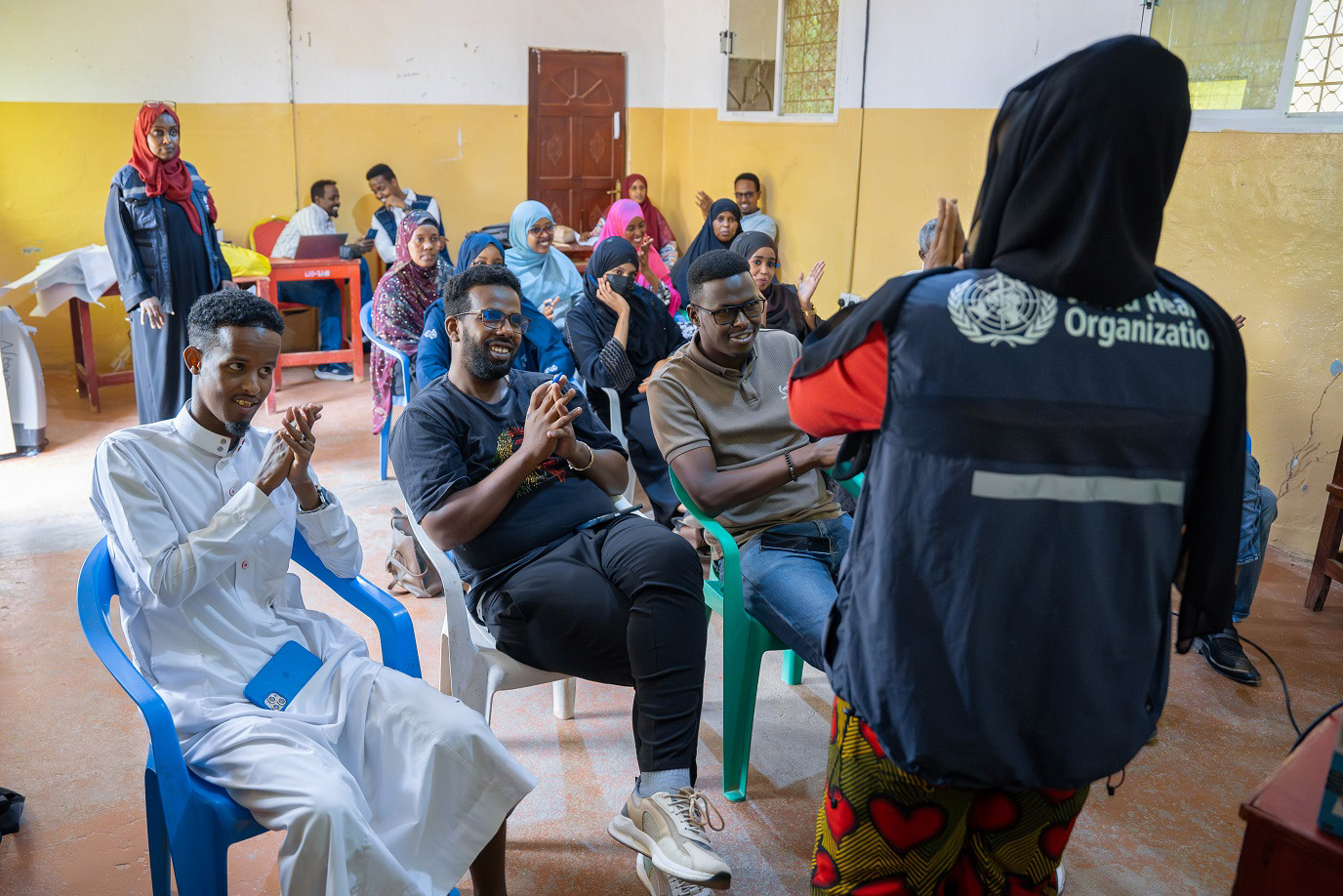

In Bosaso, a full-scale simulation tested clinical response and coordination across departments. Using colour-coded triage wristbands, designated patient zones and phased activation protocols, the drill revealed strong staff cohesion while identifying logistical gaps such as documentation and equipment shortages.
The initiative supports longer-term system strengthening. A draft mass casualty management plan was developed for Bosaso General Hospital which can serve as a model for other regional facilities. Meanwhile, a coordination workshop co-led by WHO and the United Nations Population Fund (UNFPA) in Mogadishu brought together partners to integrate mental health and psychosocial support, gender-based violence services and trauma protocols into the broader humanitarian response.
WHO Somalia aims to scale this approach to hospitals nationwide. With continued collaboration from the Ministry of Health and key partners, the goal is to reduce trauma-related mortality and morbidity while protecting frontline workers.
The health system can’t heal without its workforce healing too.

For more information:
Myriam Haberecht
Lead External Relations/Communications
WHO Somalia (
This e-mail address is being protected from spambots. You need JavaScript enabled to view it
)
Kira Britten, Donor Communications Officer
This e-mail address is being protected from spambots. You need JavaScript enabled to view it
Related link
Global Contingency Fund for Emergencies (CFE) website
link